
The Future is Here: UV 3D Printing in Healthcare and High-Tech Industries
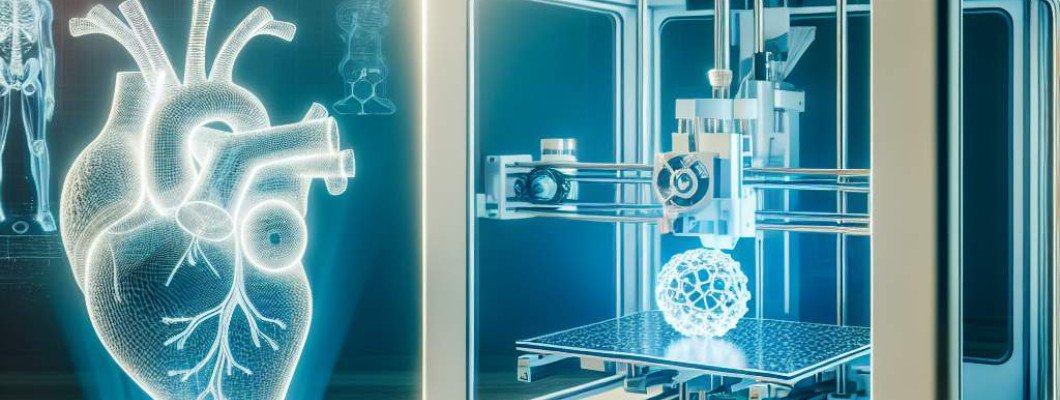
Ever wondered how UV 3D printing is transforming healthcare and high-tech industries?
If you"re in the manufacturing or medical field, chances are you"ve heard about UV 3D printing. But do you truly understand its potential? Or how it"s shaping the future of custom solutions, rapid prototyping, and precision manufacturing? Well, you"re not alone. Many professionals are still trying to catch up with this game-changing technology.
What is UV 3D Printing and Why Does It Matter?
Understanding the basics
UV 3D printing is a type of additive manufacturing that uses ultraviolet light to cure photopolymer resins layer by layer. Unlike traditional 3D printing, which often involves melting materials, UV 3D printing produces highly detailed, smooth, and durable objects. It"s often called resin printing or photopolymer printing.
Why it"s important
This technology offers incredible advantages for industries that need precision and customization. For healthcare, it means creating patient-specific implants or prosthetics quickly. In high-tech manufacturing, it enables rapid prototyping of complex parts, reducing time-to-market and costs.
The Power of UV 3D Printing in Healthcare
Personalized medical solutions
One of the biggest game-changers with UV 3D printing is its capacity for customization. Imagine printing a dental implant or a hearing aid tailored exactly for an individual"s anatomy. The speed and precision make it feasible to produce such personalized devices efficiently.
Biocompatible materials
Many UV-curable resins are now biocompatible, meaning they can be used inside the human body. This opens doors for printing surgical models, custom surgical guides, and even temporary implants. It"s like having a new level of control over patient care.
Case in point
I recently spoke with a biomedical engineer who used UV 3D printing to create a custom jaw implant. The process took a few hours instead of weeks, and the fit was perfect. That"s just one example of how rapidly this tech is impacting healthcare.
Revolutionizing High-Tech Industries with UV 3D Printing
Rapid prototyping and beyond
High-tech companies love UV 3D printing because of its ability to produce complex geometries and prototypes with fine detail. Whether it"s for aerospace, electronics, or robotics, the technology accelerates development cycles and reduces waste.
High precision and miniaturization
With UV 3D printing, you can create tiny, intricate components that are tough to make with traditional methods. This is crucial for electronics or micro-mechanical parts, where precision is paramount.
Durability and finish
The materials used in UV printing often have excellent surface finish and durability. That means parts not only look good but also perform well under operational stresses. It"s a perfect solution for creating functional prototypes or even final products.
How to Leverage UV 3D Printing in Your Business
Steps to get started
- Identify your needs: Are you creating prototypes, custom parts, or medical devices?
- Select the right equipment: Consider factors like build volume, resolution, and material compatibility.
- Choose quality resins: Look for biocompatible or high-performance materials depending on your project.
- Experiment and refine: Start with small projects to understand nuances and optimize parameters.
Maximize your results
- Invest in training or partner with experienced suppliers.
- Leverage software for designing complex geometries.
- Ensure proper post-processing — cleaning, curing, and finishing — to achieve the best results.
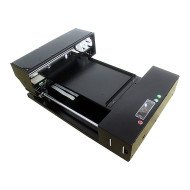
Thinking of implementing UV 3D printing? Check out the Spot UV Printing Machine. It"s perfect for adding glossy finishes and detailed coatings to your printed parts, ensuring professional quality for both healthcare and tech applications.
FAQs About UV 3D Printing in Healthcare and High-Tech Industry
- Is UV 3D printing safe for medical applications? Yes, if you use biocompatible resins and follow proper sterilization protocols, it"s safe for medical use.
- What materials are available for UV 3D printing? There are numerous resins, including flexible, rigid, transparent, and biocompatible options.
- Can UV 3D printers create functional parts? Absolutely. With the right materials and design, UV printed parts can be durable and functional.
- What"s the typical turnaround time? For prototypes, it can be just a few hours. For custom medical devices, it depends on complexity but is much faster than traditional manufacturing.
- How does UV 3D printing compare cost-wise? Initial equipment may be higher, but the savings in material, time, and flexibility make it cost-effective in the long run.














Leave a Comment